Input management
batch import Level-2 GSM products, preserve product-center, release, month, lmax, and replacement metadata.
Satellite Gravity Field
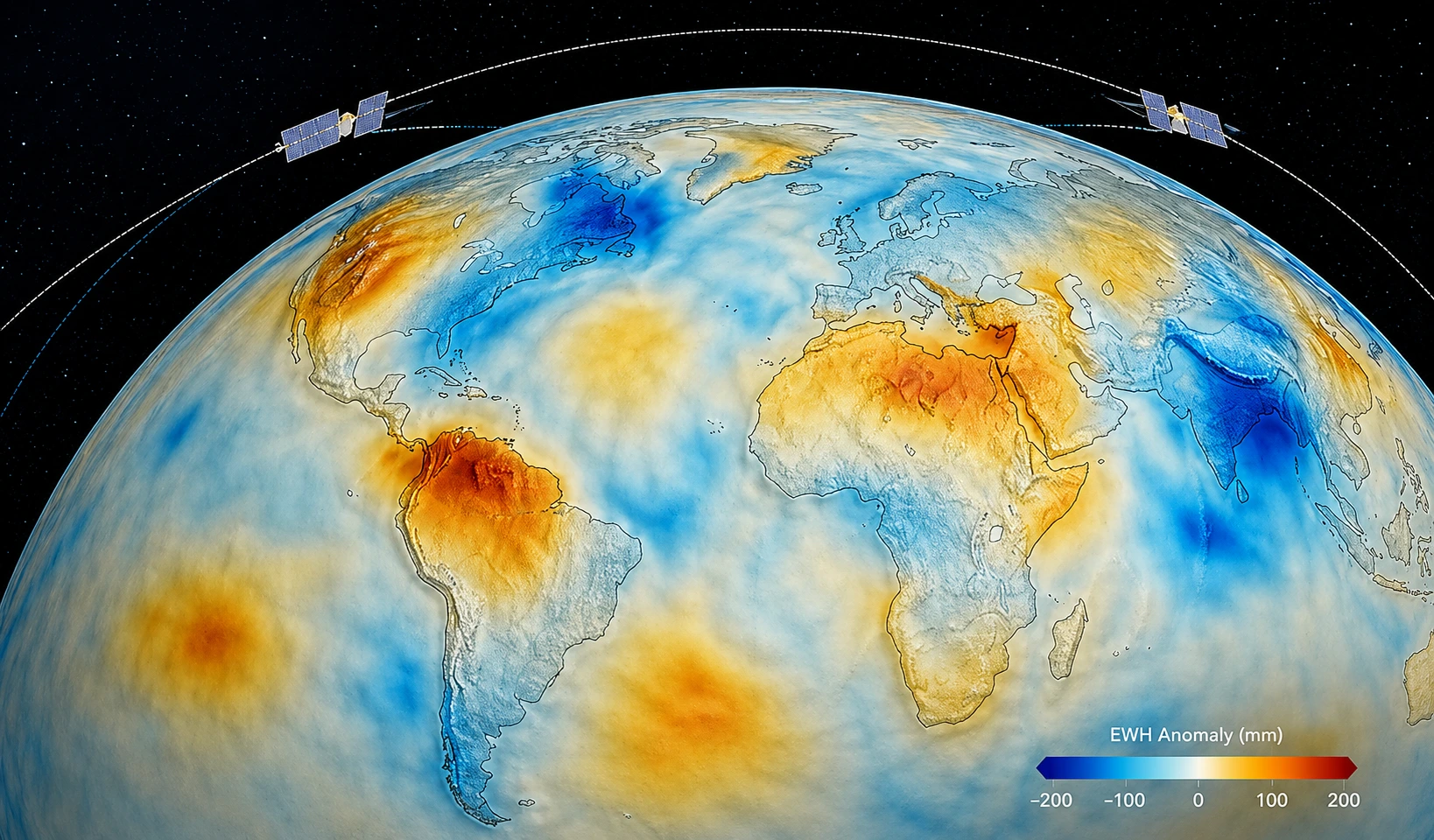
From GSM spherical harmonics to gridded EWH products
Technical notes and reproducible workflow records for transforming GRACE and GRACE-FO Level-2 spherical harmonic solutions into physically consistent equivalent water height products.
00
Start from a topic, then move between workflow notes, method records, data products, and software releases.
Acquire, preprocess, filter, synthesize, and validate Level-2 products.
MethodsFiltering notesCompare Gaussian, decorrelation, DDK, HSAF, and leakage correction routes.
DataProducts and referencesTrack GSM coefficients, EWH grids, Mascon references, masks, and diagnostics.
ArticlesReproducible recordsRead project notes with assumptions, checks, and processing contracts.
01
content copy for the GRACE Level-2 desktop workflow software. The section can later be replaced with real screenshots, versioned feature descriptions, and release-specific notes.
batch import Level-2 GSM products, preserve product-center, release, month, lmax, and replacement metadata.
run Gaussian, decorrelation, DDK, and HSAF routes side by side with explicit product tags and diagnostics.
inspect global maps, basin averages, anomaly time series, and residual stripe patterns before export.
compute area-weighted TWSA, annual/semi-annual amplitudes, linear trends, leakage-corrected series, and comparison tables.
write outputs with configuration snapshots, figure previews, processing logs, and checksum-ready release folders.
collect map checks, spectral checks, unit checks, reference-product comparison, and missing-month audit results.
a screenshot of the desktop processing workspace, including dataset selection, filter routing, and export status.
a figure or short animation showing gridded EWH preview, color scale control, and product comparison.
time-series plots, annual amplitude maps, trend summaries, and leakage-correction reports.
02
Click any processing node to inspect the scientific contract behind the step.
Input should be treated as a Level-2 gravity-field solution, usually monthly GSM spherical harmonic coefficients. The product name, processing center, release, maximum degree/order, time stamp, missing month flag, and reference frame must remain explicit.
Preprocessing converts monthly coefficients into a consistent anomaly field. Typical operations include degree-1 geocenter replacement, C20/C30 replacement using SLR, GIA correction, optional destriping preconditions, and subtraction of a stated mean field.
Filtering reduces correlated north-south striping and random high-degree noise while preserving physically interpretable mass signals. Gaussian, Fan, PnMm decorrelation, DDK, and HSAF should be routed as separate products rather than overwritten arrays.
Spherical harmonic synthesis converts corrected coefficients into equivalent water height. The Love-number correction, Earth radius, water density, grid resolution, land/ocean mask, and units must be consistent across products.
Validation should combine visual quality control with quantitative diagnostics. Basin-mean time series, annual amplitude, trend, leakage-corrected regional products, Mascon comparison, hydrology models, and altimetry are separate evidence layers.
03
Keep data products explicit, versioned, and auditable.
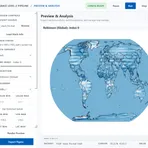
Monthly equivalent-water-height anomalies on controlled grids with product metadata and diagnostics.
Read preview note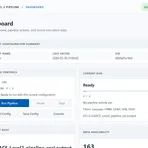
Independent products for checking spatial patterns, basin averages, and long-term behavior.
Read workflow note04
A compact record of each filter family and its routing contract.
Baseline filter families for reproducible comparison and controlled product tags.
Read article05
Latest notes from the processing log.
Access versioned installers, release notes, and software usage information from the download page.
Good processing is transparent, testable, and reproducible.
Workflow first, results follow.